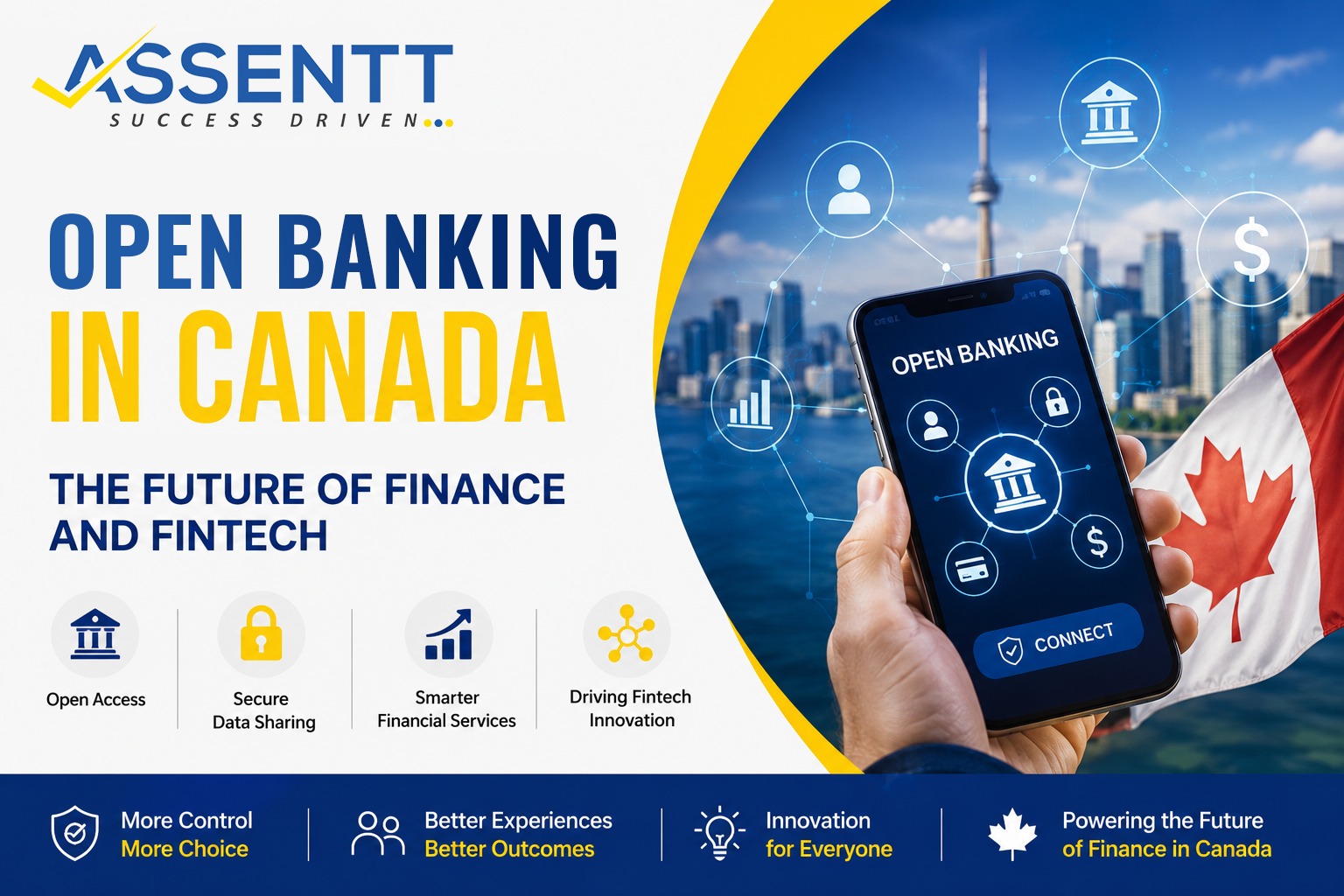
Open Banking in Canada 2026: The Future of Finance and Fintech
Open Banking in Canada is Transforming Financial Services
Open Banking in Canada is set to redefine how Canadians interact with banks, financial institutions, and fintech companies. By enabling secure, customer-authorized sharing of financial data through standardized APIs (Application Programming Interfaces), open banking empowers consumers and businesses with greater control over their financial information while encouraging innovation across the financial sector.
For decades, Canadians have relied on traditional banking systems where financial data remained within individual institutions. Open Banking introduces a more connected ecosystem, allowing customers to securely share their banking information with approved third-party financial service providers. The result is greater competition, improved financial products, enhanced customer experiences, and faster innovation.
As Canada continues developing its Open Banking framework in 2026, businesses and consumers should understand how these changes will shape the future of finance.
What is Open Banking?
Open Banking is a secure financial system that allows consumers and businesses to authorize the sharing of their banking information with licensed third-party providers.
Instead of manually downloading statements or sharing online banking credentials, customers can provide permission for financial information to be shared securely using encrypted APIs.
This creates opportunities for innovative financial services such as:
- Personal financial management platforms
- Digital lending solutions
- Automated accounting software
- Budgeting applications
- Investment management tools
- Faster payment systems
- Business cash flow analysis
- Credit assessment solutions
Customers remain in control because they decide who can access their financial information and can revoke that access whenever they choose.
Why is Canada Moving Toward Open Banking?
Many countries have already adopted Open Banking frameworks, including the United Kingdom, Australia, and several European nations.
Canada is introducing Open Banking to:
- Increase competition within the banking industry
- Encourage fintech innovation
- Improve consumer choice
- Enhance financial inclusion
- Reduce dependence on insecure screen scraping
- Strengthen data security
- Modernize Canada's financial infrastructure
The federal government has been working with financial institutions, regulators, fintech companies, and industry stakeholders to establish a secure and consumer-focused Open Banking framework.
Benefits of Open Banking in Canada
Better Financial Control
Consumers gain greater visibility into all of their financial accounts through a single platform, making it easier to monitor spending, savings, investments, and debt.
Improved Access to Credit
Traditional lending often relies heavily on credit scores and historical borrowing. Open Banking enables lenders to evaluate real-time financial information, helping more individuals and businesses access financing.
Faster Loan Approvals
With customer permission, lenders can instantly verify income, account balances, and transaction history, significantly reducing approval times.
Smarter Business Banking
Small businesses benefit from automated bookkeeping, improved cash flow forecasting, easier reconciliation, and more accurate financial reporting.
Enhanced Financial Innovation
Fintech companies can develop new products and services that improve budgeting, investing, lending, insurance, and financial planning.
How Open Banking Benefits Canadian Businesses
Businesses stand to benefit significantly from Open Banking.
Some key advantages include:
- Faster access to financing
- Simplified bookkeeping
- Better cash flow visibility
- Automated invoice reconciliation
- Improved payroll integration
- More accurate financial forecasting
- Enhanced fraud detection
- Easier integration with accounting software
For growing businesses, these efficiencies can reduce administrative work while providing better financial insights for decision-making.
Open Banking and Fintech
Fintech companies are expected to be among the biggest beneficiaries of Open Banking.
By securely accessing customer-authorized financial data, fintech firms can build innovative solutions such as:
- AI-powered budgeting tools
- Investment advisory platforms
- Digital mortgage applications
- Business lending platforms
- Real-time expense tracking
- Financial wellness applications
- Automated tax preparation
- Smart accounting software
This creates a more competitive financial ecosystem where consumers have access to a wider range of personalized financial services.
Is Open Banking Safe?
Security remains one of the most important considerations.
Canada's Open Banking framework is designed around:
- Customer consent
- Strong encryption
- Secure APIs
- Data privacy protections
- Accredited third-party providers
- Regulatory oversight Consumer control over shared data
Unlike traditional screen scraping, Open Banking eliminates the need for customers to share online banking usernames and passwords with third-party applications, reducing security risks.
Open Banking and Blockchain
Although Open Banking and blockchain are separate technologies, they complement one another.
Open Banking focuses on securely sharing financial information between trusted institutions, while blockchain provides transparent, decentralized record-keeping.
Together, they could support:
- Faster cross-border payments
- Improved fraud prevention
- Smart contracts
- Digital identity verification
- Supply chain finance
- Tokenized assets
- Secure financial record management
As financial technology evolves, these innovations may work together to create a more efficient and secure financial ecosystem.
The Future of Finance in Canada
Open Banking represents one of the most significant changes to Canada's financial system in decades.
As more financial institutions, fintech companies, and regulators embrace secure data sharing, Canadians can expect:
- Greater banking competition
- More personalized financial products
- Faster financial services
- Improved lending decisions
- Better digital banking experiences
- Enhanced financial transparency
- Continued fintech innovation
Businesses that understand these changes early will be better positioned to take advantage of new financial technologies and opportunities.
Canada's fintech sector is maturing, blending stringent regulatory oversight with blockchain-driven innovation. The integration of these technologies promises a faster, more competitive, and transparent financial ecosystem for businesses and consumers alike.
The information provided is for educational/entertainment purposes only. Actual information may vary, please consult our office for further details. Got a question? Feel free to reach us at helpdesk@assentt.com.