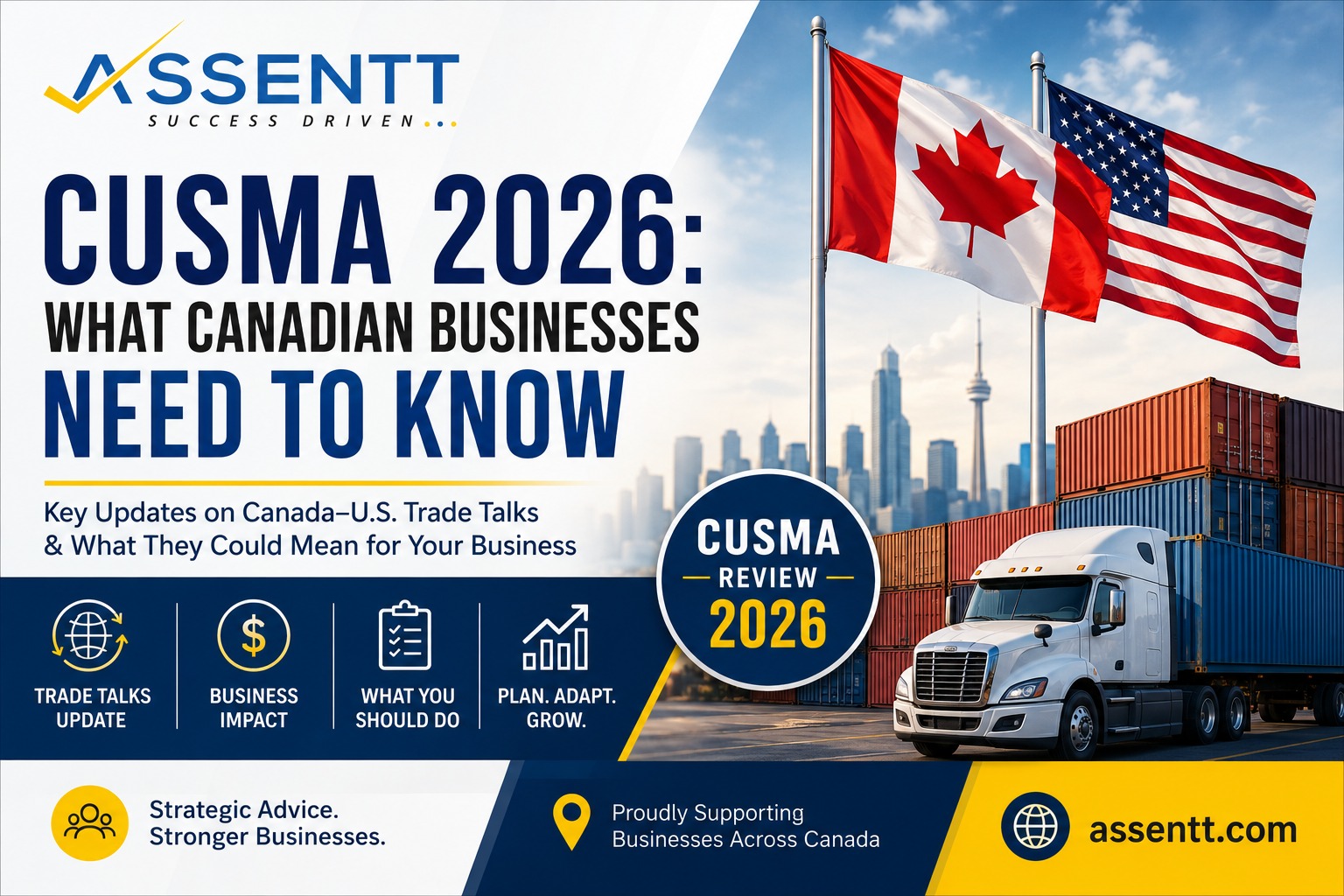
USA Trade Deal: CUSMA 2026
Why Canadian Businesses Should Pay Attention to the Canada–U.S. Trade Talks
Trade between Canada and the United States has long been one of the most important drivers of the Canadian economy. From manufacturing and agriculture to energy, transportation, and professional services, countless Canadian businesses rely on stable access to the U.S. market.
As the 2026 review of the Canada–United States–Mexico Agreement (CUSMA) approaches, business owners across the country are paying closer attention to trade negotiations and what they could mean for the future of cross-border commerce.
While CUSMA remains in effect, recent discussions between Canada and the United States have highlighted ongoing disagreements surrounding tariffs, market access, and the future direction of North American trade. Although no immediate changes have been announced, the review process has introduced a level of uncertainty that businesses cannot afford to ignore.
What Is Happening with CUSMA?
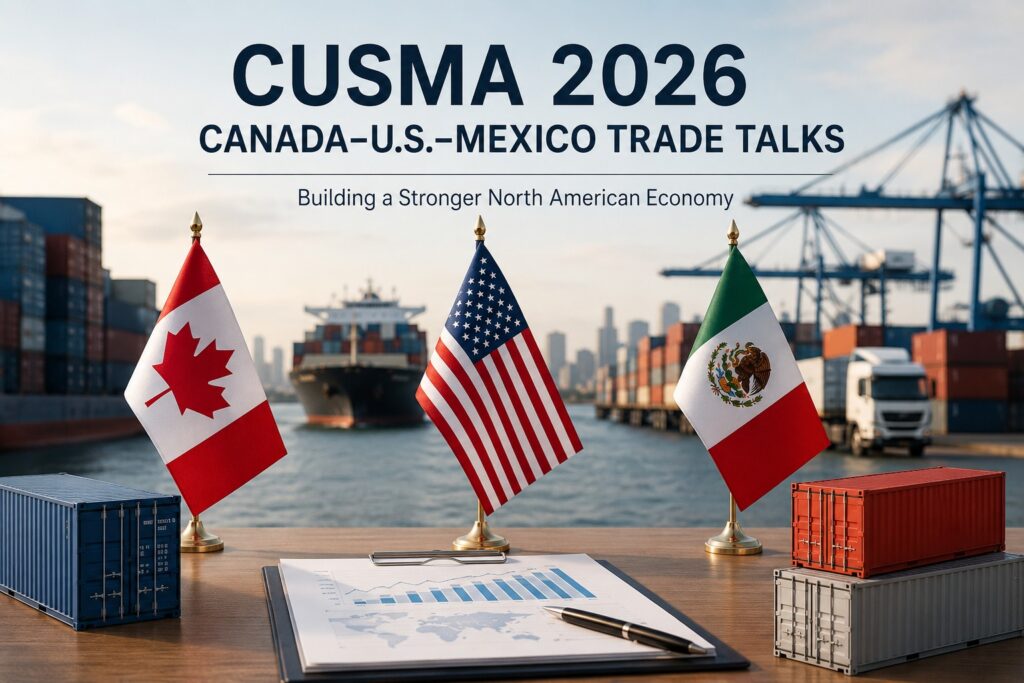
CUSMA, which came into force in 2020, replaced the North American Free Trade Agreement (NAFTA) and established the current framework for trade between Canada, the United States, and Mexico.
The agreement includes a mandatory review mechanism scheduled for 2026. During this process, the three countries will assess the agreement’s performance and determine whether it should be extended for another 16-year period.
Canada has expressed support for renewing the agreement, while discussions with the United States continue regarding a variety of trade-related concerns. As negotiations progress, businesses are closely monitoring developments that could affect future trade conditions.
Why Are Businesses Paying Attention to USA Trade Deal 2026?
Trade agreements provide certainty.
When businesses have confidence in future trade rules, they are more likely to invest, hire employees, expand operations, and pursue long-term growth opportunities.
Uncertainty, on the other hand, can influence decisions related to:
- Capital investments
- Inventory planning
- Supply chain management
- Hiring and expansion
- Financing requirements
- Cross-border partnerships
Even businesses that do not export directly may be affected through suppliers, customers, or broader economic conditions.
Which Industries could be Impacted by USA Trade Deal?
Several Canadian industries have significant exposure to North American trade and are following the negotiations closely. These include:
Manufacturing
Manufacturers often rely on integrated supply chains that cross borders multiple times during the production process. Changes to trade rules or tariffs can increase costs and disrupt operations.
Automotive
The automotive sector remains one of the most interconnected industries in North America. Vehicle components frequently move between Canada, the United States, and Mexico before final assembly.
Agriculture and Food Processing
Canadian farmers and food producers depend heavily on export markets. Market access and trade stability remain critical for long-term planning.
Energy and Natural Resources
Canada’s energy sector continues to play an important role in North American energy security. Trade discussions can influence investment decisions and infrastructure planning.
Transportation and Logistics
Companies involved in shipping, warehousing, and cross-border transportation are directly affected by trade volumes and regulatory changes.
The Role of Tariffs under USA Trade Deal 2026
One of the major issues being discussed during current trade negotiations involves tariffs and retaliatory trade measures.
Tariffs can increase costs for businesses, affect pricing strategies, and create uncertainty within supply chains. While governments use tariffs to address specific trade concerns, businesses often bear the burden of adapting to changing market conditions.
For this reason, many business owners are watching negotiations closely to understand how future trade policies may affect their operations.
What Should Canadian Businesses Do Now?
While it is impossible to predict the final outcome of negotiations, businesses can take practical steps to improve their readiness.
Review Supply Chains
Understand where products, materials, and components originate. Businesses that rely heavily on a single supplier or region may benefit from exploring additional sourcing options.
Evaluate U.S. Exposure
Companies should assess how much of their revenue, customer base, or operations depend on the U.S. market.
Strengthen Cash Flow Planning
Periods of uncertainty highlight the importance of maintaining healthy working capital and cash reserves.
Reassess Financing Needs
Businesses planning major investments or expansion projects should review financing options and ensure flexibility within their capital structure.
Build Flexibility into Contracts
Where possible, businesses should review pricing arrangements, supplier agreements, and customer contracts to ensure they can adapt to changing market conditions.
Why USA Trade Deal matters beyond exporters
Many Canadians assume trade agreements only affect large exporters. In reality, trade policies influence the broader economy in numerous ways.
Changes in trade conditions can affect:
- Consumer prices
- Business confidence
- Investment activity
- Employment levels
- Supply chain costs
- Economic growth
As a result, even businesses with little direct exposure to international trade may still feel the impact of changing trade relationships.
Looking Ahead
The 2026 CUSMA review represents an important milestone for Canada, the United States, and Mexico. While negotiations may continue to evolve over the coming months, the review process serves as a reminder of how closely connected North American economies have become.
For Canadian business owners, the focus should remain on preparation rather than prediction.
Businesses that maintain strong financial planning, healthy cash flow, diversified relationships, and operational flexibility are often best positioned to navigate uncertainty and capitalize on future opportunities.
Final Thoughts on USA Trade Deal: CUSMA 2026
Trade agreements may seem distant from day-to-day business operations, but their impact can be significant. As discussions surrounding CUSMA continue, Canadian businesses should stay informed and proactively assess how changing trade conditions could affect their future plans.
Whether you operate locally, nationally, or internationally, thoughtful planning remains one of the most effective tools for managing uncertainty and building long-term resilience.
At Assentt, we help business owners navigate changing economic conditions through strategic financial planning, business financing, cash flow management, and growth advisory services designed to support long-term success.
The information provided is for educational/entertainment purposes only. Actual information may vary, please consult our office for further details. Got a question? Feel free to reach us at helpdesk@assentt.com.