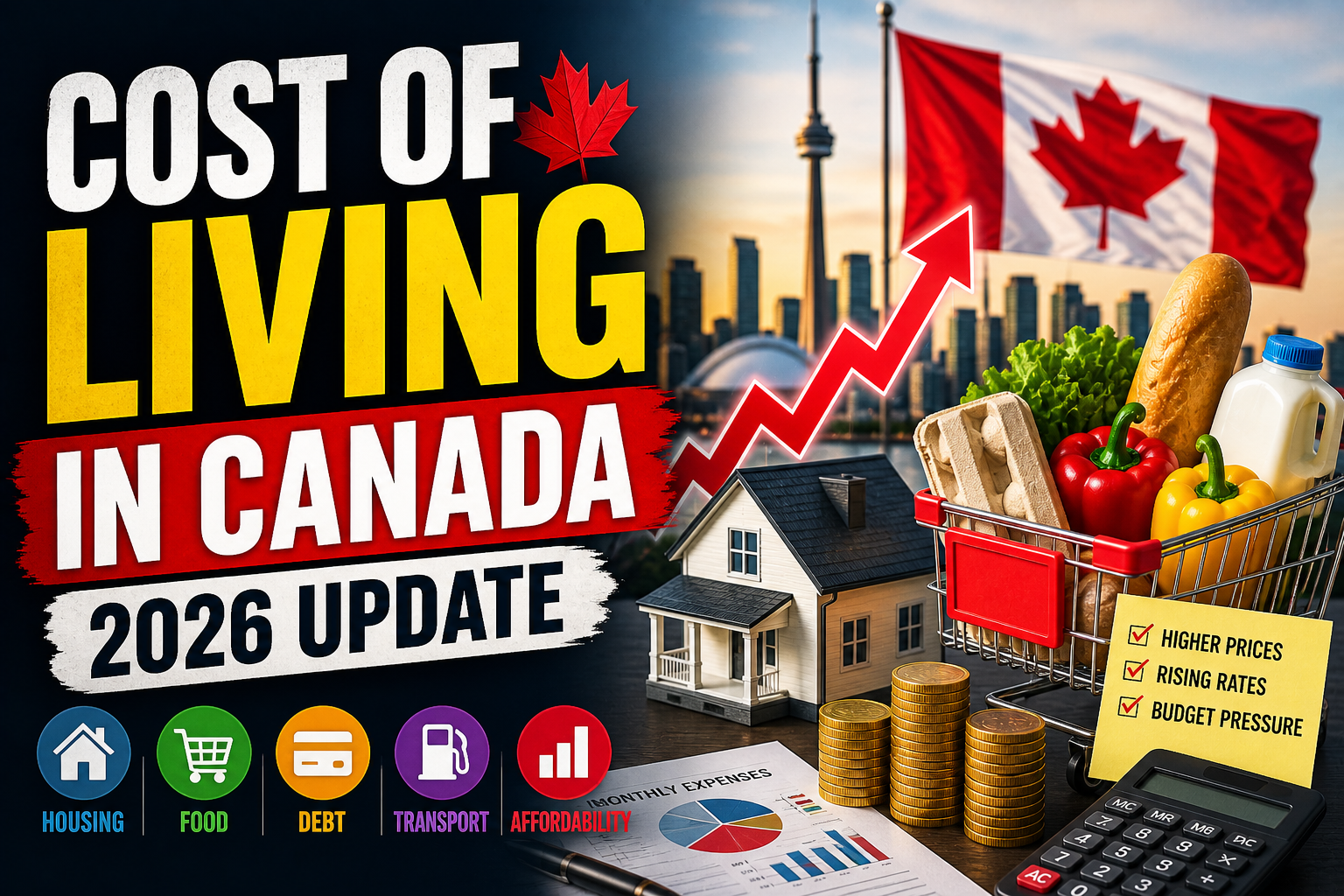
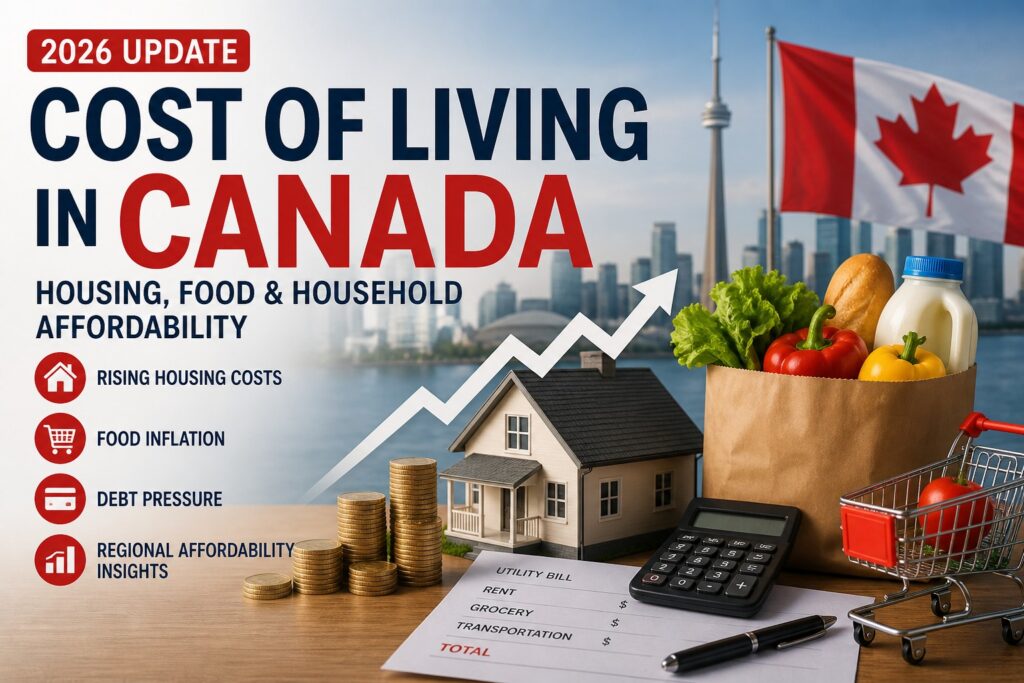
Cost of Living in Canada 2026: Housing, Food & Household Affordability
The cost of living in Canada remains one of the most pressing financial concerns in 2026. A majority of Canadians identify affordability as their top issue, as essential expenses such as housing and groceries continue to rise faster than wages.
Although overall inflation has stabilized at around 2.4%, the reality for most households is very different—core living costs remain elevated, putting sustained pressure on budgets.
Housing in Canada: The Biggest Expense
Housing continues to be the largest financial burden for Canadian households. Many families now spend between 35% and 50% of their pre-tax income on shelter and utilities.
Key Housing Trends:
- Affordability Threshold: Spending over 30% of income on housing signals financial stress
- Average Home Price (2026): $673,084 nationally
- Major Cities:
- Vancouver: $1.27M
- Toronto: $1.06M
- Rental Costs:
- Vancouver: $2,512/month (1-bedroom)
- Toronto: $2,360/month
More affordable cities like Regina and Montreal offer some relief, but demand continues to rise.
Takeaway: Housing affordability is the single biggest contributor to financial strain in Canada.
Food Inflation in Canada
Food prices continue to rise faster than overall inflation. Let’s take a closer look at grocery costs across Canada.
Grocery Cost Breakdown:
- Family of four annual cost: $16,800–$17,000
- Price increases:
- Coffee: +30.8%
- Beef: +16.8%
Consumers are increasingly:
- Shopping across multiple stores
- Switching to private-label products
- Cutting non-essential grocery items
Takeaway: Grocery inflation is driving noticeable changes in consumer behaviour.
Cost of Living by City in Canada
The cost of living varies significantly depending on location.
Estimated Monthly Cost (CAD)
| City | Single Person | Family of 4 |
|---|---|---|
| Vancouver | $4,349 | $8,228 |
| Toronto | $3,800 | $7,750 |
| Calgary | $3,619 | $6,500 – $7,800 |
| Montreal | $3,000 | $5,500 |
| Regina | $1,526 | $3,500 – $4,500 |
Takeaway: Choosing where to live is one of the most impactful financial decisions Canadians can make.
Debt and Interest Rates in 2026
Higher borrowing costs continue to impact households across Canada.
- Mortgage Rates: High for 5-year fixed terms
- Rising Debt: Many Canadians report increased debt
- Credit Usage: Many rely on credit cards for essentials
Takeaway: Debt is increasingly being used to manage basic living expenses—not lifestyle spending.
Everyday Expenses Adding Pressure
Beyond housing and food, essential services continue to strain monthly budgets.
- Utilities: $208–$210/month
- Internet & Mobile: $145–$150/month
- Public Transit: $98–$164/month
- Fuel: Remains volatile and inflationary
Takeaway: Even non-discretionary expenses are significantly impacting affordability.
How Canadians Are Managing Rising Costs
Households are adapting in several ways:
- Creating stricter budgets
- Reducing discretionary spending
- Exploring shared housing options
- Relocating to more affordable provinces
- Improving energy efficiency
Final Thoughts
Despite easing inflation, the cost of living in Canada remains elevated in 2026. Housing, food, and debt pressures continue to outpace income growth, forcing households to rethink financial strategies.
Affordability will remain a defining issue shaping both personal finances and economic policy in the years ahead.
Sources: Statistics Canada, CMHC, Canada Food Price Report 2026, Rentals.ca (latest available data).
The information provided is for educational/entertainment purposes only. Actual information may vary, please consult our office for further details. Got a question? Feel free to reach us at helpdesk@assentt.com.