Newcomer to Canada Tax Checklist (2026): A Complete Guide for First-Time Tax Filers
This Newcomer to Canada Tax Checklist will help you understand the essential CRA requirements, documents, and tax benefits you should know before filing your first Canadian tax return.
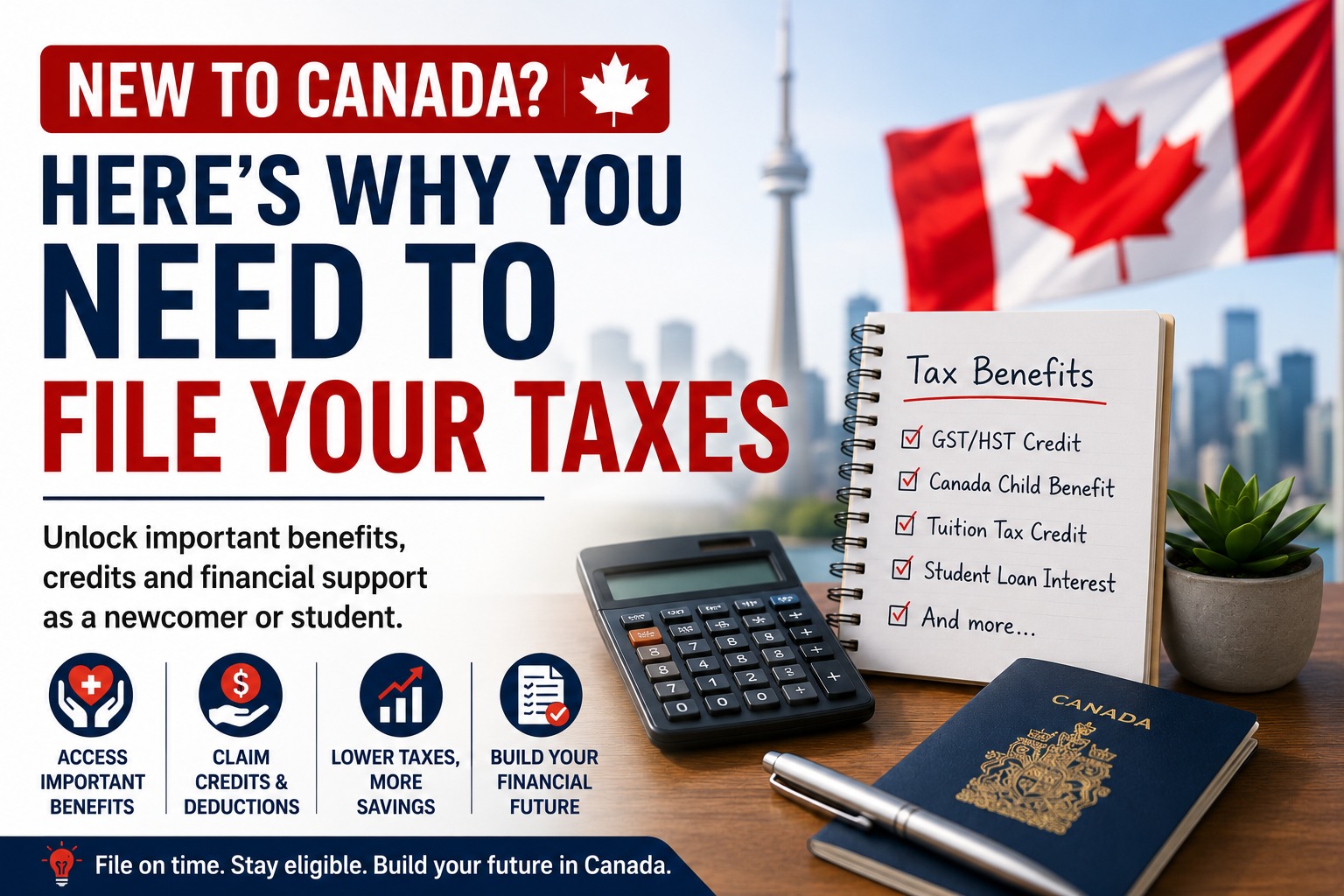
For many newcomers and international students, filing taxes in Canada may seem confusing or unnecessary—especially during the first year after arrival. However, filing a tax return is one of the most important financial steps you can take in Canada. Beyond meeting legal obligations, filing your taxes allows you to access valuable government benefits, credits, and financial support programs.
Canada’s tax system helps fund essential public services and social programs that support individuals and families across the country. Filing taxes also helps establish your financial record in Canada and ensures you remain eligible for important government payments and future benefits.
Why Paying Taxes Matters in Canada
Taxes play an important role in maintaining Canada’s public services and social support systems. Tax revenues help fund:
- Universal healthcare
- Public education
- Roads and public infrastructure
- Employment Insurance (EI)
- Canada Pension Plan (CPP)
- Old Age Security (OAS)
- Canada Child Benefit (CCB)
Canada’s progressive tax system is also designed to support social programs and reduce income inequality. Filing taxes is necessary to receive many federal and provincial benefits, even if you earned little or no income during the year.
Why Filing Taxes Is Important for Newcomers
For newcomers, filing taxes is often the first step toward accessing financial support programs in Canada. You may need Newcomer to Canada Tax Checklist for the purposes of understanding the tax process in the first place.
Once you establish significant residential ties in Canada—such as a home, spouse, or dependents—you may be considered a resident for tax purposes.
GST/HST Credit
Newcomers with modest incomes may qualify for the GST/HST credit after becoming Canadian tax residents. This tax-free quarterly payment helps offset some of the sales taxes paid on everyday purchases.
Eligible individuals can apply shortly after arrival by submitting Form RC151 and providing information about their worldwide income.
Canada Child Benefit (CCB)
Families with children under 18 may qualify for the Canada Child Benefit, a monthly tax-free payment designed to help with the cost of raising children.
Newcomers can apply shortly after arriving in Canada using Form RC66.
Building Your Financial Record
Filing taxes also helps establish your financial profile in Canada. A consistent filing history may help support future applications related to:
- Loans and mortgages
- Student assistance
- Government programs
- Immigration and residency processes
Important Tax Credits for Students
For international students and young adults, filing taxes can unlock valuable tax credits and future savings opportunities—even if little or no income was earned during the year.
Tuition Tax Credit
Eligible students may claim a federal non-refundable tax credit equal to 15% of eligible tuition fees, along with potential provincial tuition credits depending on their province of residence.
Unused tuition amounts may also be carried forward to future years and applied later when income increases.
Canada Training Credit (CTC)
Eligible Canadians between ages 26 and 65 who meet income requirements may accumulate up to $250 annually toward the Canada Training Credit, with a lifetime accumulation limit of $5,000.
This credit may help offset future eligible education and training expenses.
Student Loan Interest Credit
Students may also claim a tax credit for interest paid on eligible government student loans. However, interest paid on private loans or lines of credit generally does not qualify.
Following this Newcomer to Canada Tax Checklist can help you avoid common filing mistakes and ensure you receive all the tax credits and benefits you may be eligible for.
Important Rules to Remember
The 90% Rule
In certain situations, newcomers may claim federal non-refundable tax credits if 90% or more of their worldwide income for the year was earned in Canada.
CRA My Account
After filing your first tax return, you may register for CRA My Account, which allows you to:
- Track refunds and benefit payments
- Access tax slips and notices
- Update personal information securely
- Reduce the risk of tax-related scams and fraud
Filing Deadlines
Most individuals in Canada must file their tax return by April 30 each year. Filing on time helps avoid penalties and ensures government benefit payments continue without interruption.
Conclusion
Filing taxes in Canada is about more than simply meeting legal requirements—it is also the key to accessing valuable financial benefits and building your financial future. Whether you are a newcomer, international student, or first-time tax filer, understanding the Canadian tax system can help you maximize available credits, avoid delays in benefits, and establish strong financial habits early on.
Tax eligibility and benefit amounts may vary based on individual circumstances, residency status, province of residence, and annual income. Consulting a qualified tax professional can help ensure accurate filing and maximize available benefits.
We hope this Newcomer to Canada Tax Checklist helps you prepare for your first Canadian tax return. If you need personalized guidance, the tax professionals at Assentt are here to help.
Need Help Filing Your First Canadian Tax Return?
If you're unsure how to complete every step in this Newcomer to Canada Tax Checklist, professional tax advice can help you file accurately and confidently.
Check nowCRA Benefits and Credits for Newcomers
The information provided is for educational/entertainment purposes only. Actual information may vary, please consult our office for further details. Got a question? Feel free to reach us at helpdesk@assentt.com.