
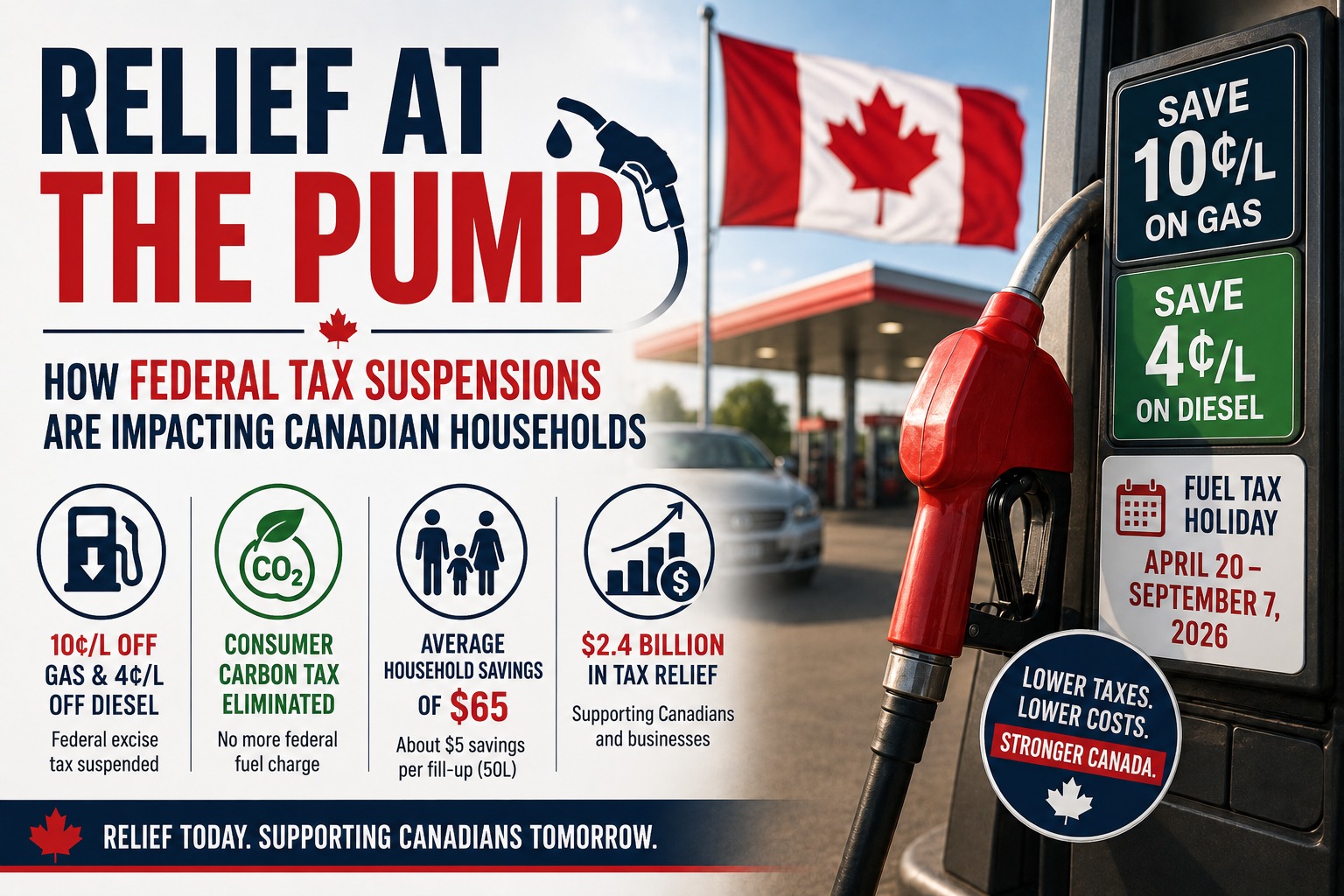
Relief at the Pump: How Federal Tax Suspensions are Impacting Canadian Households
As Canadians continue to face elevated living costs in 2026, fuel prices remain a major concern for households and businesses across the country. In response to rising gasoline and diesel prices driven by global supply shortages and ongoing geopolitical tensions in the Middle East, the federal government has introduced temporary fuel tax relief measures aimed at easing financial pressure at the pump.
Combined with the earlier removal of the federal consumer carbon tax, these changes represent one of the most significant shifts in Canada’s fuel pricing landscape in recent years. While fuel costs remain historically high, the current tax relief measures are providing Canadians with modest but meaningful savings during a period of economic uncertainty.
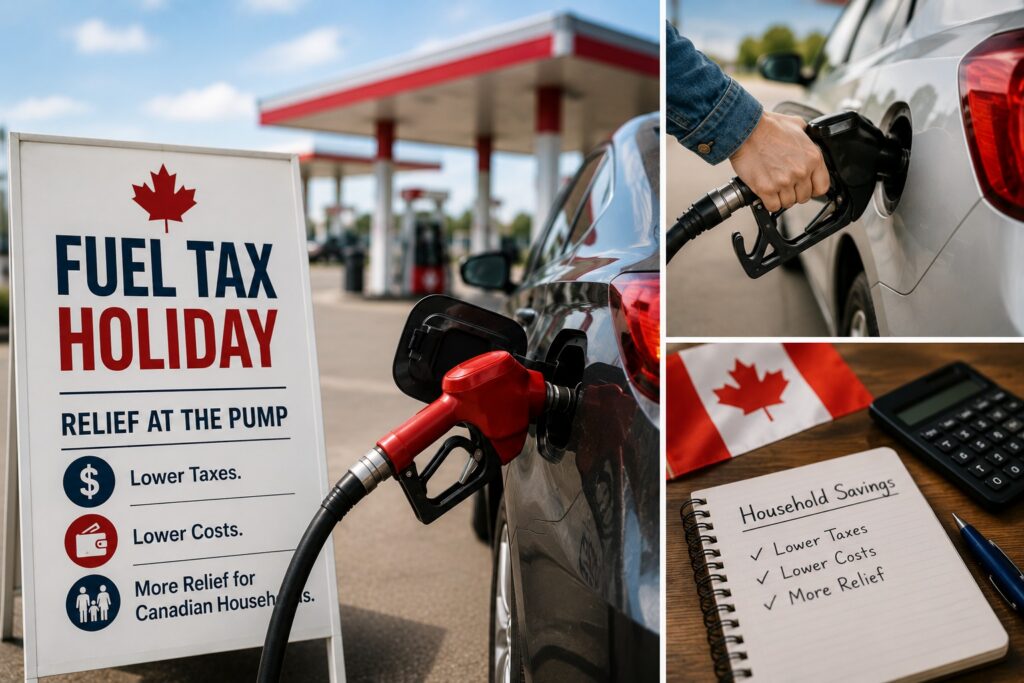
The Federal Fuel Tax Holiday (April – September 2026)
In early 2026, gasoline prices surged by more than 40 cents per litre in many regions across Canada. To provide temporary relief, the federal government introduced a “Fuel Tax Holiday” beginning April 20, 2026.
The temporary suspension will remain in effect until September 7, 2026, covering the busy summer travel season.
Key Fuel Tax Reductions
Under the program:
- The federal excise tax on gasoline has been temporarily reduced to zero
- Canadians are receiving approximately 10 cents per litre in gasoline savings
- Diesel users are seeing savings of approximately 4 cents per litre
- Excise taxes on aviation fuel have also been suspended to help stabilize transportation and delivery costs
The federal government estimates the initiative will deliver approximately CAD 2.4 billion in tax relief for households and businesses during the five-month period.
The temporary suspension will remain in effect until September 7, 2026, covering the busy summer travel season.
Carbon Pricing Changes in 2026
Canada’s carbon pricing framework has also undergone major changes over the past year.
Consumer Carbon Tax Eliminated
On April 1, 2025, the federal consumer-facing carbon tax on gasoline, diesel, and natural gas was effectively eliminated by reducing the fuel charge rate to zero. As a result, Canadians no longer pay a federal carbon levy at the pump in 2026.
Industrial Carbon Pricing Remains
Although the consumer carbon tax has been removed, Canada’s industrial carbon pricing system remains active for large emitters such as oil, gas, steel, and manufacturing companies under the federal Output-Based Pricing System.
Canada Carbon Rebates Winding Down
With the consumer fuel charge eliminated, the Canada Carbon Rebate program has largely phased out. However, some Canadians may still receive final retroactive payments related to previous tax years.
Provincial Fuel Tax Relief Measures
Several provinces have also introduced or extended their own fuel tax reductions to complement federal relief efforts.
Ontario
Ontario has extended its provincial gas tax reduction of 5.7 cents per litre through June 30, 2026, continuing support for drivers and businesses.
Manitoba
Manitoba is currently reviewing market conditions and considering whether additional provincial fuel tax reductions may be implemented in the coming months.
Alberta
Alberta has chosen to maintain its existing fuel tax formula rather than introducing a new suspension, citing the province’s continued reliance on energy revenues to support its 2025–26 budget.
How Much Are Canadians Saving?
The fuel tax holiday is expected to generate direct savings for millions of Canadian households.
Estimated Household Savings
The average Canadian household is projected to save approximately CAD 65 during the five-month federal tax suspension period.
For drivers filling a standard 50-litre gasoline tank, savings are estimated at roughly:
- CAD 5.00 per fill-up on gasoline
- Lower diesel costs for commercial transportation and trucking operations
Combined with the earlier elimination of the federal consumer carbon tax, total fuel-related savings may reach as high as 28 cents per litre compared to 2024 tax levels.
Broader Economic Benefits
In addition to household savings, the federal government hopes the tax suspension will help reduce inflationary pressure across several sectors of the economy.
Lower Transportation and Operating Costs
Reduced diesel costs may help lower operating expenses for industries including:
- Transportation and logistics
- Agriculture
- Construction
- Delivery services
While immediate reductions in grocery or housing prices may not occur, policymakers believe the measures may help slow future cost increases for essential goods and services.
Support for Lower-Income Households
Financial analysts note that lower-income households may benefit the most proportionally, as a larger share of disposable income is typically allocated toward transportation and energy-related expenses.
Encouraging Summer Travel
The timing of the fuel tax holiday is also intended to encourage domestic travel during the summer season, potentially supporting tourism, retail, and hospitality businesses across Canada.
Fuel Prices Remain Elevated
Despite the temporary tax relief measures, fuel prices across Canada remain significantly higher than previous years due to ongoing global market instability.
As of late April 2026, average gasoline prices remained near CAD 1.96 per litre in many regions. While the current federal measures provide approximately CAD 7 to CAD 10 in savings per fill-up for some drivers, many consumer advocacy groups continue to call for additional relief measures, including the removal of GST on fuel purchases.
Conclusion
Canada’s 2026 fuel tax relief measures reflect the federal government’s effort to address affordability concerns during a period of elevated energy prices and economic uncertainty. Through temporary excise tax suspensions and the earlier elimination of the consumer carbon tax, Canadians are receiving modest but meaningful savings at the pump.
While fuel costs remain heavily influenced by global events and market volatility, these measures may help ease short-term financial pressure for households and businesses alike. As economic conditions continue to evolve, affordability and energy policy are expected to remain key areas of focus for governments across Canada.
The information provided is for educational/entertainment purposes only. Actual information may vary, please consult our office for further details. Got a question? Feel free to reach us at helpdesk@assentt.com.