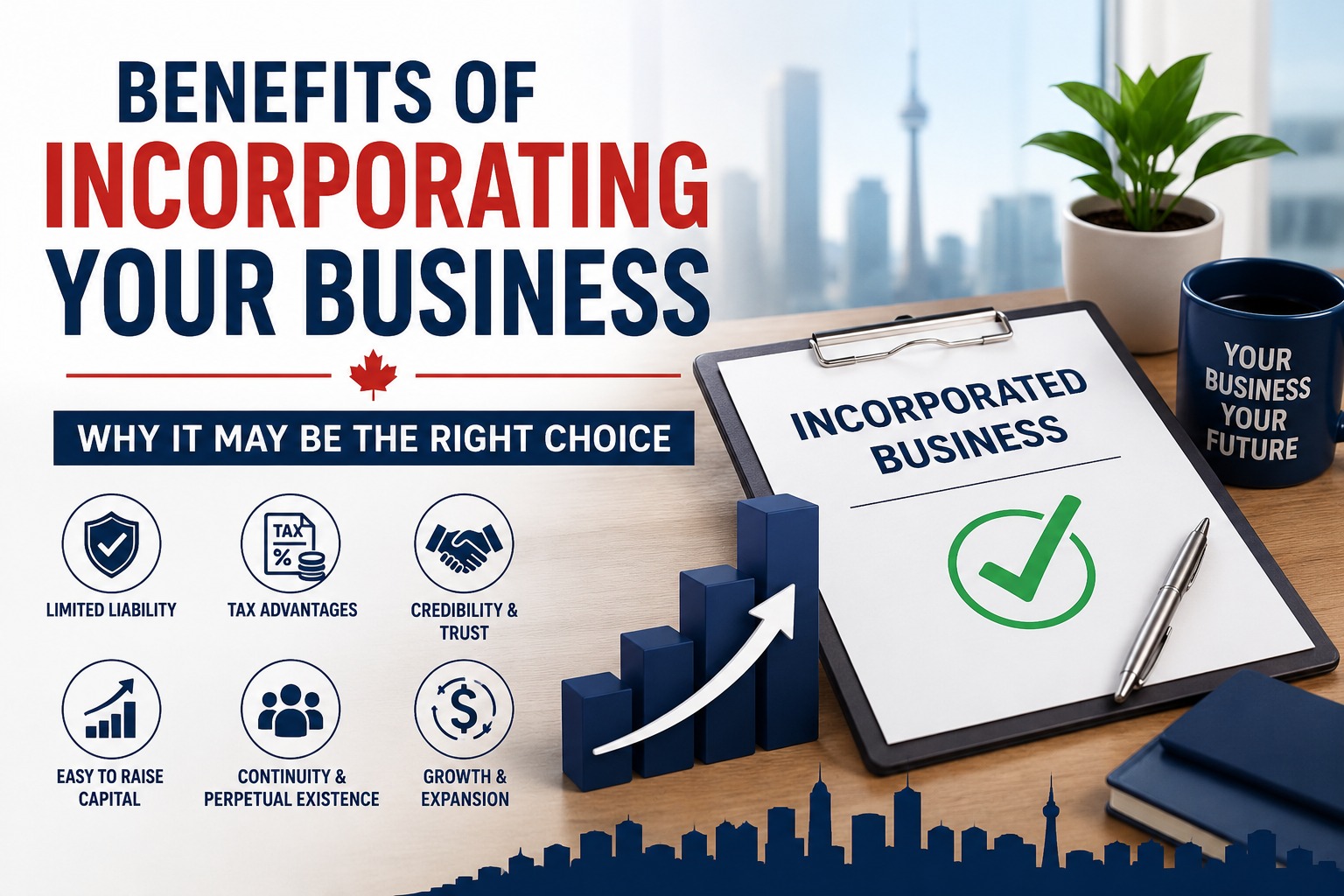

Benefits of Incorporating your Business extend far beyond simply registering a company. Incorporation can provide limited liability protection, tax planning opportunities, greater business credibility, and a stronger foundation for future growth. Whether you’re operating a side hustle, working as a self-employed professional, or managing an expanding business, understanding the advantages of incorporation can help you make an informed decision.
While incorporation isn’t the right choice for every business, it may offer significant long-term benefits depending on your income, industry, growth plans, and financial objectives. This guide explores the key Benefits of Incorporating your Business in Canada and explains when incorporation may be worth considering.
Read our simple 7 point benefits of Incorporating a Business as follows for further clarification on the topic.
1. Limited Liability Protection
One of the primary Benefits of Incorporating your Business is limited liability protection.
Because a corporation is generally considered a separate legal entity, shareholders are typically not personally responsible for the corporation’s debts or obligations simply because they own shares. This separation can help reduce personal financial exposure when business risks arise, although there are important legal exceptions, such as personal guarantees, certain director liabilities, or situations involving fraud or misconduct.
For many entrepreneurs, protecting personal assets is an important consideration when deciding whether to incorporate.
2. Tax Planning Opportunities
Another important benefit of incorporation is the potential for additional tax planning opportunities.
Depending on your circumstances, an incorporated business may allow greater flexibility in managing business income, retaining earnings within the corporation, and planning compensation through salary or dividends. Canadian-Controlled Private Corporations (CCPCs) may also qualify for certain preferential tax treatment on eligible active business income, subject to applicable rules.
The most appropriate strategy depends on your business, income level, and long-term objectives, making professional tax advice valuable before making incorporation decisions.
3. Enhanced Business Credibility
Incorporation can strengthen the professional image of your business.
Many customers, suppliers, financial institutions, and business partners view incorporated businesses as more established and committed to long-term operations. While incorporation alone does not guarantee credibility, it can enhance confidence when pursuing contracts, partnerships, or financing opportunities.
For growing businesses, projecting professionalism can be an important competitive advantage.
4. Easier Access to Financing
Businesses often require financing to expand operations, purchase equipment, hire employees, or improve cash flow.
Although incorporation does not guarantee loan approval, lenders generally evaluate a corporation’s financial statements, business plan, and repayment capacity when considering financing applications. Well-organized corporate records can strengthen loan applications and demonstrate financial discipline.
Many incorporated businesses seek financing through:
- Small business loans
- Equipment financing
- Commercial lending
- Business lines of credit
- Private business loans
5. Greater Flexibility for Growth
As businesses grow, their needs become more complex.
An incorporated structure may make it easier to:
- Hire employees
- Expand into new markets
- Open additional locations
- Attract investors
- Bring in business partners
- Acquire other businesses
A corporation also provides a structured framework that supports long-term planning and expansion.
6. Easier Ownership Transfer
Ownership changes are generally more straightforward within a corporation.
Instead of transferring business assets individually, ownership can often be transferred through the sale or transfer of shares, depending on the circumstances.
This flexibility may support:
- Succession planning
- Estate planning
- Business sales
- Bringing in new shareholders
As businesses mature, these advantages become increasingly valuable
Â
7. Better Separation Between Personal and Business Finances
Maintaining a clear distinction between personal and business finances is an important part of effective financial management.
An incorporated business generally operates through its own bank accounts, accounting records, and financial statements.
This separation can help with:
- Bookkeeping
- Financial reporting
- Tax compliance
- Cash flow management
- Business decision-making
Accurate financial records also simplify year-end reporting and support future financing opportunities.
When Should You Consider Incorporating?
Every business is unique, and there is no single point at which incorporation becomes necessary.However, many entrepreneurs begin exploring incorporation when they: Generate consistent business profits Plan to retain earnings within the business Hire employees Take on greater business risks Seek outside investment Expand operations Enter into larger contracts Require business financingEvaluating both your current position and future goals can help determine whether incorporation is appropriate.
When Incorporation May Not Be Necessary
Although incorporation offers many advantages, it is not always the best option.You may decide to remain a sole proprietor if: Your business generates relatively modest income. You are testing a new business idea. Your business has minimal liability exposure. Administrative simplicity is a priority. You do not expect significant business growth in the near future.The right business structure depends on your individual circumstances and should be reviewed as your business evolves.
Frequently Asked Questions
Is incorporating my business worth it?
It depends on factors such as profitability, liability exposure, future growth plans, and long-term financial objectives. Every business should be evaluated individually.
Can one person incorporate a business in Canada?
Yes. A corporation may be formed with a single shareholder, subject to the applicable federal or provincial incorporation requirements.
Will incorporation reduce my taxes?
Incorporation may create additional tax planning opportunities in certain situations, but it does not automatically reduce taxes. The potential benefits depend on your business and financial circumstances.
Should I incorporate my side hustle?
Some side businesses eventually benefit from incorporation as they grow. Factors such as income, risk, and future expansion plans should all be considered before making a decision.
Do I need professional advice before incorporating?
Seeking professional advice can help ensure that incorporation aligns with your financial goals, tax position, and long-term business plans.
How Assentt Can Help
Choosing the right business structure is one of the most important financial decisions an entrepreneur can make. While the Benefits of Incorporating your Business can be significant, incorporation also introduces additional legal, tax, and compliance responsibilities.
At Assentt, we help entrepreneurs, self-employed professionals, incorporated businesses, and growing companies evaluate whether incorporation is the right choice. Our team provides guidance on business incorporation, tax planning, bookkeeping, corporate tax compliance, financial reporting, payroll, and ongoing business advisory services.
Whether you're launching a new venture or preparing for your next stage of growth, we can help you make informed decisions with confidence.
Conclusion
The Benefits of Incorporating your Business extend beyond liability protection. Incorporation can provide opportunities for tax planning, enhance business credibility, support future growth, improve access to financing, and create a more structured foundation for long-term success. However, incorporation also comes with additional responsibilities, making it important to evaluate both the advantages and obligations before making your decision.If you're considering incorporation or would like to understand which business structure best suits your goals, consulting with experienced professionals can help you move forward with confidence.
The information provided is for educational/entertainment purposes only. Actual information may vary, please consult our office for further details. Got a question? Feel free to reach us at helpdesk@assentt.com.